Tuesday, June 16, 2009

Book Moments: Nefertiti's Timeless Beauty


Nefertiti definitely stands out as one of the most beautiful and entrancing women of all times. Everything ever written on her sums her beauty as extraordinarily regal, aristocratic and enigmantic. Her gaze was magnetic and proud; she had an air that commanded admiration and total enrapture. It’s no wonder that this woman was able to move almost heaven and earth, so to speak…Her husband was totally bewitched by her.


So far, ‘Nefertiti’ by Michelle Moran, has captured me in trance…a few chapters left of this engaging read. Look forward to a promising review very soon.

-

Sunday, June 14, 2009

Book Review: Louis XIV by Vincent Cronin


I can’t recall when or if I’ve ever read anything historically factual that was this captivating. Here’s a history book that reads better than a novel. Truly, the life of Louis XIV is described in such vivid details that I couldn’t help being totally absorbed by this book. There is a section dedicated to practically every imaginable aspect of Louis’ life.

Not only are the King’s numerous and lucrative achievements clearly explained throughout; the specifics of his attitude, beliefs, mannerisms, thought processes, creativity and more, unfold with such eloquence and sequence, it’s impossible to put this book down. Your curiosity passes from one topic to the other. Before you know it, you’ve read the whole book.

Louis was a King who was completely in his element as ruler of his country. His total and absolute regality was totally natural for him; yet, he had the keenest of abilities for understanding people of all levels.

There are sections dedicated to the important women in his life, filled with the most interesting personal particularities that were an absolute delight for me to read. There is also a section that goes into the minute specifics of a typical day in his life. I was surprised to learn of Louis’ unbelievably huge appetite (there’s a whole section on this too) as well as the whole ordeal of getting the meal to him. Here’s a passage on this:

‘To reach the royal table the King’s dinner had to cross the Rue de la Surintendance, enter the south wing, mount a staircase, pass through several corridors, cross the upper vestibule of the staircase of the princes, the salon of the shopkeepers (Versailles had its own shopping center), the Grand Hall of the guards, the upper vestibule of the marble case and finally the Hall of the King’s Guards.’

Louis was also the brains behind much of the Versailles creation- he was a patron of the arts and was responsible for much of France’s grandeur. There was also a domestic side to Louis as well as a profound devotion to Catholicism; both of these aspects being more prominent towards the latter days of his life.

I learned so much from this fact-filled book! I highly recommend Louis XIV to anyone who is interested in learning more about this great King, his Court, his Ladies, and all that he influenced throughout history. This historical read surpassed all expectations. Excellent!

-

Thursday, June 11, 2009

Le Jeudi de Josephine: A Lady's Sonnet


This Jeudi, I’m posting a beautiful sonnet for the Empress Josephine. I found it on this site (Famous Women: Sacred and Profane by Glen Levin Swiggett); where you’ll find a sonnet written for every great woman in history. There’s also one written on Marie Antoinette that I think is just so perfect. I have to say that although I’m fascinated by Josephine, I also adore Marie Antoinette, la Reine Martyre.

Here is the one for Josephine:

Letizia, mother of Napoleon,
So dearly known to him as Madame mère
And to the world for her maternal care
Of him at Elba, for herself has won
Affection greater than we shower upon
His Empress whose great beauty did not spare
Her, nor her tact, when he at last did dare
Divorce and exile her to Malmaison.
Napoleon's wish to found a dynasty
Far greater than his land had ever known,
To kings and princes of the Church and State
Related disavowed her for sterility,
Though in her former children she had shown
Such gifts as did him highly fascinate.
And, for Marie Antoinette
A king of France once said, I am the State;
And with this thought so lived he paved the way
For revolution at a later day,
When of French queens the most unfortunate,
Marie of Austria, that sorry fate
Endured from frenzied populace, a prey
To passions, dead to pity, that would slay,
Their baser humors to propitiate.
Marie was but a child when as a bride
She came to France, becoming soon a queen.
Caught in the current of intrigue and war,
And, with her husband, helpless in the tide
Of hate, she bravely faced the guillotine
When came her turn to ride the fatal car.


And this one for Marie Antoinette:

A king of France once said, I am the State;
And with this thought so lived he paved the way
For revolution at a later day,
When of French queens the most unfortunate,
Marie of Austria, that sorry fate
Endured from frenzied populace, a prey
To passions, dead to pity, that would slay,
Their baser humors to propitiate.

Marie was but a child when as a bride
She came to France, becoming soon a queen.
Caught in the current of intrigue and war,
And, with her husband, helpless in the tide
Of hate, she bravely faced the guillotine
When came her turn to ride the fatal car.


Painting: http://www.translating-william-shakespeare.com/image-files/sonnet_mulready.gif

Monday, June 8, 2009

Venice...of Decadence and Redemption


Today I was inspired to write about a different kind of beauty pertaining to Venice; the breathtakingly splendid beauty of its Churches and Cathedrals.


Throughout history, this great city where blissful pleasures of the senses were either decadent or sublime, laid the foundation of great spiritual sanctuaries where people turned to find peace, forgiveness or direction. All that you see and breathe in Venice is historical- a constant and abundant reminder of a time when La Serenissima was the heart and center of Europe.


I remember being about ten years old and walking the ‘calle’ of Venice with my uncle when I asked him why there were so many churches in Venice- literally one at every corner or so. I remember his wink and his answer as though it were yesterday:

Venice was once a place where sinners found their ‘paradise’ and so, churches were built in consequence...so many sinners- so many churches.”


I was intrigued by that resonse and never quite understood it until I began studying Venice's history.


Sometimes the magnetic power of extreme beauty can pull man either way, resulting in a struggle. Ultimately though, I believe that in every soul is the goal for inner peace, harmony and love for all…


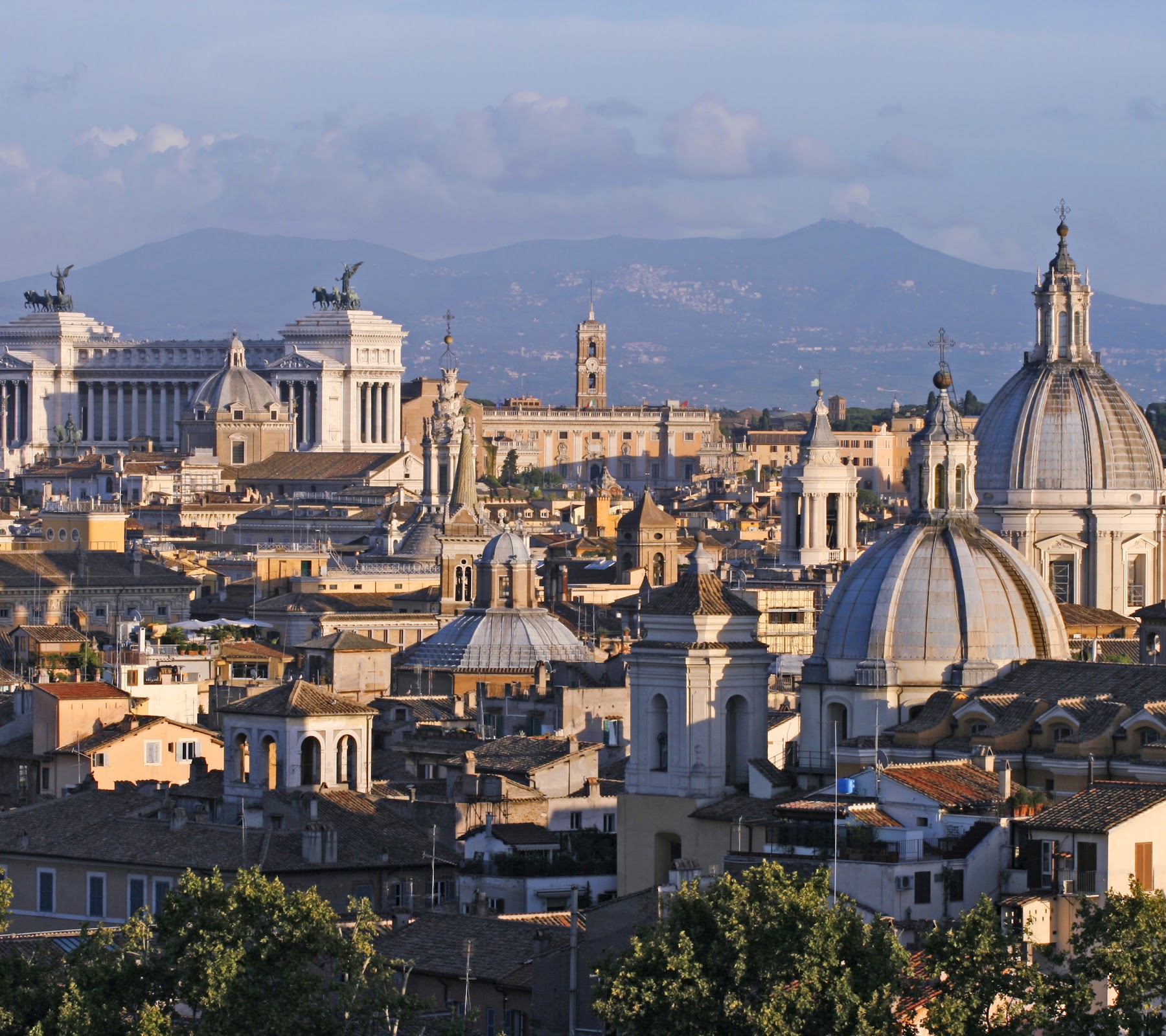
Rather than posting about the obvious grand Cathedrals that many of you already know about, here are some pictures of Venice’s earliest churches.


Venice’s oldest Church: San Giacomo di Rialto (San Giacometto) in the San Polo sector- built in 421


Cathedral of Santa Maria Assunta also built in the 5th century and, Santa Fosca, which was built in the 11th century. The two are connected by a portico. They’re in Torcello.


Have a wonderfully peaceful day. Many blessings:)


-

Thursday, June 4, 2009

Le Jeudi de Joséphine: Yeyette et la Martinique...

Josephine -Marie Josèphe Rose Tascher de la Pagerie was born in Martinique. Josephine is often mistaken as being first and foremost French, when she was in fact a Creole.

It was in this beautiful country where her family owned a sugar plantation, that Josephine acquired her smooth and sensuous ways. Yeyette, as she was often called, claimed that her innate calmness and composure, with a blend of the wild, was naturally due to her island upbringing (but also included some quite passionate outbreaks). La Martinique; a place where beauty and serenity were a way of life...

This is also the place where the prophecy that she 'would one day be Queen' was revealed to her.

Here is a picture of Josephine’s house, where she grew up in Martinique. It’s now a museum.


-

Wednesday, June 3, 2009

Historical Flavor of the Week: Madame De Maintenon


Madame De Maintenon (November 27, 1635- April 15,1719)

How did this lady who was literally raised in the staunchest of poverty, come to be Louis XIV’s secret wife?

Bit of background:

Françoise d'Aubigné, at the age of fifteen, was sent to Paris to be entrusted to the Ursuline nuns for her upbringing. In Paris, a year later, she was married off to Paul Scarron a 41 year-old (burlesque poet in his youth) whose body had become severely deformed and paralyzed due to rheumatoid arthritis. Nonetheless, Scarron managed to get himself appointed at the Court of Anne of Austria as a jester. He loved Francoise dearly and taught her many languages and even helped her open up her own salon. That was the extent of his money lending though, as he spent every last penny searching for a cure to his illness. Eight years later Francoise was left a penniless widow.
Anne of Austria took pity on her when she saw that Francoise was a widow in dire need and decided to give her an annual pension.


So, finally, how did this lady who seemed to have been struck with constant misfortune attract the eye of the Sun King?


Word of mouth spread that she would be perfect to be governess of Louis’ children by Montespan. Disturbed by the nature of Louis’ relationship with Montespan, Francoise initially seeked counsel from her confessor who quickly advised her that whatever the King wished for, was approved by God (even an adultress liaison). From that point on, as long as it was Ok in God’s eyes, Francoise became a dutiful governess filled with a sense of loyalty to the King. Consequently, Louis bestowed her with the title of Marquise de Maintenon , after her estate.


Francoise was a virtuous woman of duty, though ‘rather cold’, she was dedicated to her work and terrified by the wrath of God. Louis became attracted to this woman who fascinated him with her stories of youth, the way she brought up the children, her religious ardor, sense of order and judicious advice. When he finally broke off all ties with Montespan, it was Francoise who urged him to be faithful and loving to the Queen. In her clear, yet subtle ways, she convinced him to follow a more correct and virtuous path by staying with the Queen and remaining faithful to her. Somehow Louis was convinced; resulting in probably the best last few years of the Queen’s life. For this, the Queen was forever grateful to De Maintenon.


After the Queen’s death, Louis became more and more drawn to Madame de Maintenon, until he fell deeply in love with her. At this point Louis found her irresistible and due to his Bourbon temperament, made every attempt to ‘conquer’ her. This is where Francoise was different from all the rest: She made sure to decline his invite since sleeping with a man other than one’s husband, even a King, was to her most sinful.


In 1684 (this is an approximate date deducted by Maintenon’s own letters), a morganatic marriage took place. Louis and Francoise were secretly married (He was 45 and she 48). This was never publicly announced and although there was constant speculation in the King’s court, noone could say for sure.


She became a source of sage wisdom for the King, who respected her opinion in many ways. Madame de Maintenon did not always agree with the ways of the court. Although Louis did not make such a big deal about flamboyant behaviours of others, Madame de Maintenon frowned upon much that was going on around her at court. She was extremely prudish and would find even the Opera a sinful form of art. She did not particularly like to attend this event, even though this was Louis’ favourite form of entertainment. Fortunately the King had mellowed with age and his love for the lady helped overcome their obvious differences.


Her letters apparently reveal that she was most happy in her marriage with Louis. The couple remained together until the end. As for the King; ‘the woman that Louis most loved and respected was Francoise d’Aubigny, Madame de Maintenon.’


Madame de Maintenon and Louis XIV


-

Tuesday, June 2, 2009

TEASER TUESDAY!


This Teaser Tuesday came my way courtesy of The Burton Review.

TEASER TUESDAYS
is hosted by ShouldBeReading and asks you to:
♠Grab your current read.
♠Let the book fall open to a random page.
♠Share with us two (2) “teaser” sentences from that page.
♠You also need to share the title of the book that you’re getting your “teaser” from … that way people can have some great book recommendations if they like the teaser you’ve given!
♠Please avoid spoilers!

My Enemy the Queen, by Victoria Holt (another Jean Plaidy pen name)
Pg.57

‘“We must hope that none of them produce a black calf,” Walter told me, and when I wanted to know why he explained: “ There’s a legend in the family. If a black cat appears that means there will be a death in the family.”’

I didn’t get to this part yet…so I’m quite curious about what's happening here.

My Enemy The Queen is the book that we’ve chosen to read for this month of June at our Plaidy’s Royal Intrigue blog. If anyone has this book and would love to join our group, just come by and drop us a line. The more the merrier!


-